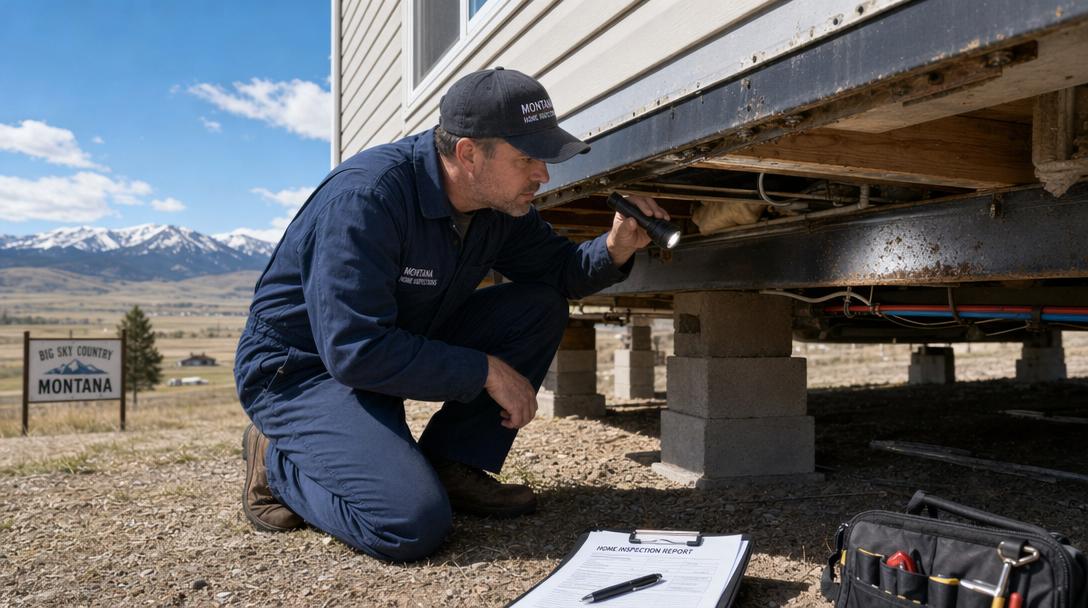
A mobile home inspection in Billings, MT, typically costs $300–$500 and can uncover critical issues like foundation shifts caused by Montana’s freeze-thaw cycles. Sellers preparing for resale and buyers seeking peace of mind rely on these inspections to avoid costly surprises. By following a structured checklist, you’ll identify red flags unique to mobile homes—like skirting damage or improperly sealed seams—that generic home inspectors might overlook.
Step 1: Examine the Foundation for Stability
Check piers, anchors, and leveling systems for rust, decay, or misalignment. Mobile homes in Billings often use concrete or steel piers, which can shift due to soil expansion. A tilted home may indicate foundational failure. Tip: Walk around the perimeter and use a level on walls to spot unevenness.
Warning: Skipping this step risks overlooking structural instability that could void insurance or complicate financing.
Step 2: Inspect the Roof for Weather Damage
Look for cracked shingles, rust spots, or sagging areas—common in Billings’ harsh winters. Mobile home roofs are thinner than site-built homes, making them prone to hail damage. Test seams around vents with a garden hose to check for leaks.
Step 3: Test Plumbing and Drainage Systems
Turn on all faucets and flush toilets to assess water pressure and drainage speed. In mobile homes, poorly insulated pipes often freeze in winter. Check under sinks for soft flooring, which signals chronic moisture issues.
Step 4: Verify Electrical System Compliance
Confirm the breaker box is labeled clearly and outlets function. Mobile homes built before 1976 may use outdated wiring standards. A licensed inspector should check for improper grounding, which poses fire risks unique to older units.
Step 5: Scan Flooring for Soft Spots
Press down firmly on floorboards near high-traffic areas. Spongy spots indicate water damage or rot—common under sinks or around sliding glass doors. Billings’ dry climate can mask slow leaks until floors become irreparably damaged.
Step 6: Check the Vapor Barrier Condition
Lift skirting panels to inspect the plastic vapor barrier beneath the home. Tears or gaps allow moisture to rise, causing mold growth in floor joists. This step is often skipped but critical in Montana’s semi-arid climate where temperature swings accelerate decay.
Warning: Ignoring vapor barrier issues leads to costly subfloor repairs and reduced energy efficiency.
Step 7: Assess HVAC and Ventilation
Run heating and cooling systems to ensure proper function. Mobile homes often use compact HVAC units that wear faster than traditional systems. Check air filters and ductwork for leaks, which drive up energy bills during Billings’ extreme winters.
Step 8: Evaluate Skirting and Underpinning
Walk the perimeter and look for damaged or missing skirting panels. These panels protect plumbing from freezing and keep pests out. In Billings, vinyl skirting often cracks from UV exposure—replace broken sections to maintain the home’s integrity.
Step 9: Review Documentation and Permits
Confirm the home has proper permits for any modifications. Billings County requires mobile homes to meet HUD code stickers and site-specific zoning rules. Missing paperwork can delay sales or trigger code enforcement actions.
Step 10: Compile Inspection Findings
Receive a detailed report outlining repair priorities and safety hazards. A quality inspection should include photos and cost estimates tailored to Billings’ market. Use this report to negotiate repairs or adjust your budget before closing.
Key Takeaway: A thorough mobile home inspection in Billings protects against hidden costs tied to Montana’s climate and local building codes.
After completing these steps, homeowners gain clarity on maintenance needs and resale value. For best results, hire a Billings-based inspector familiar with mobile home parks and regional weather patterns to avoid generic assessments that miss local risks.
Frequently Asked Questions
What is the typical cost of a mobile home inspection in Billings, MT?
A mobile home inspection in Billings, MT, usually costs between $300 and $500. This cost can vary depending on the scope of the inspection and the specific inspector.
Why is foundation inspection important for mobile homes in Billings?
Inspecting the foundation is crucial because Montana's freeze-thaw cycles can cause concrete or steel piers to shift. This shifting can lead to foundational failure, which might void insurance or complicate financing.
What are some common roof issues found in mobile homes in Billings?
Mobile home roofs are thinner than those on site-built homes, making them susceptible to damage from Billings' harsh winters. Common issues include cracked shingles, rust spots, sagging areas, and hail damage.
What should be checked regarding the electrical system in a mobile home?
It's important to confirm that the breaker box is clearly labeled and all outlets are functional. Older mobile homes, especially those built before 1976, may have outdated wiring standards or improper grounding, which can pose fire risks.
Why is checking the vapor barrier critical for mobile homes in Montana?
Checking the vapor barrier is critical because tears or gaps allow moisture to rise from the ground, leading to mold growth in floor joists. Ignoring this can result in costly subfloor repairs and reduced energy efficiency, especially with Montana's temperature swings.
What role does skirting play in mobile home integrity?
Skirting panels protect the home's plumbing from freezing temperatures and prevent pests from entering the crawl space. In Billings, vinyl skirting can crack due to UV exposure, so replacing damaged sections is important for maintaining the home's integrity.
Why is it important to review documentation and permits for a mobile home?
Reviewing documentation and permits ensures that any modifications to the mobile home are properly authorized. Missing paperwork can delay sales or lead to code enforcement actions, as mobile homes in Billings County must meet HUD code stickers and zoning rules.